I'll admit I'm not a frequent reader. Whenever I find time to read, I either end up reading blogs online or browsing videos that catch my interest. I think this is one of the downsides of living everything in a "concentrated" and "fast" way today: getting by on "summaries" instead of making time for long paragraphs and descriptions.
On the other hand, when it comes to books, I'm a complete magpie. Whenever I pass a bookshop like Nezih, D&R or Remzi, I always take a turn around the book section and leaf through the ones whose covers catch my eye. And even though I knew I wouldn't read them, I used to never leave empty-handed, telling myself I'd read them one day. At least I've managed to rein that in now.
If I can manage not to wander off topic, I'll get to e-book readers. The product that turned even a tech lover who reads "little" like me into a book reader was the Kindle. It's not really fair to single out the Kindle — there are many e-book readers on the market — but the Kindle is one of the most successful in terms of quality and features. In this post, rather than the usual comparison of e-reader specs, I want to focus on the question of why we should read e-books at all.
First, let's set aside the friends who say "nothing beats the smell of a book". There's no "scented" Kindle yet, so I won't be able to convince those who believe the old way is always best. On the other hand, I hope this will be useful for anyone wondering whether an e-reader would help them read more, or whether they'd get on with one.
What Is a Kindle / E-Reader?
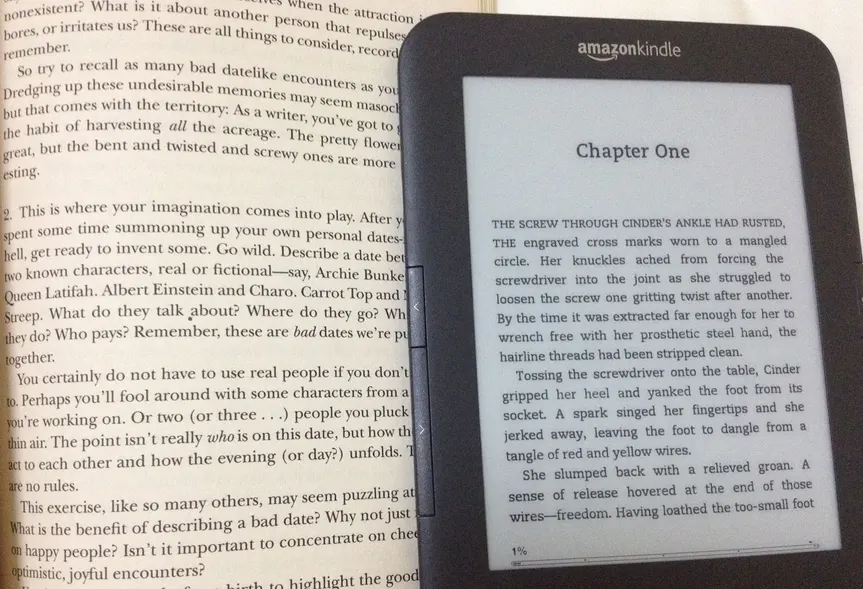
As the name suggests, these are devices that let you read books on a screen that uses electronic ink instead of ink printed on paper; they're called e-book readers, or e-readers for short. Their biggest difference from a regular computer, tablet or phone is the screen technology. Reading text on these screens is no different from reading text printed in ink on paper. Take a look at the photo below to see what I mean:
What Are the Advantages?
Its biggest advantage over a regular book is its size. Carrying a 200–300 page book means carrying weight. And a single e-reader can hold hundreds, even thousands of books. Beyond that, you get features like searching inside books, quick bookmarks, taking notes and highlighting. You can read in direct sunlight (on the beach, say) with no problem, and thanks to the backlit models you can even read in the dark right before bed. Unlike the electronics we're used to, the battery doesn't need charging every day or every other day. If you read for 1–2 hours a day, charging once a month (yes, once a month, or even every two months) is usually enough.
Its most important advantage, though, is that it doesn't tire your eyes the way a computer or tablet does.
What Are the Disadvantages?
It doesn't smell like a book. Jokes aside, when I think about it, I can't really find a tangible downside. Perhaps the biggest one right now is that you can't find an e-book version of every printed book. But there are groups doing very good work on that.
Effect on Reading
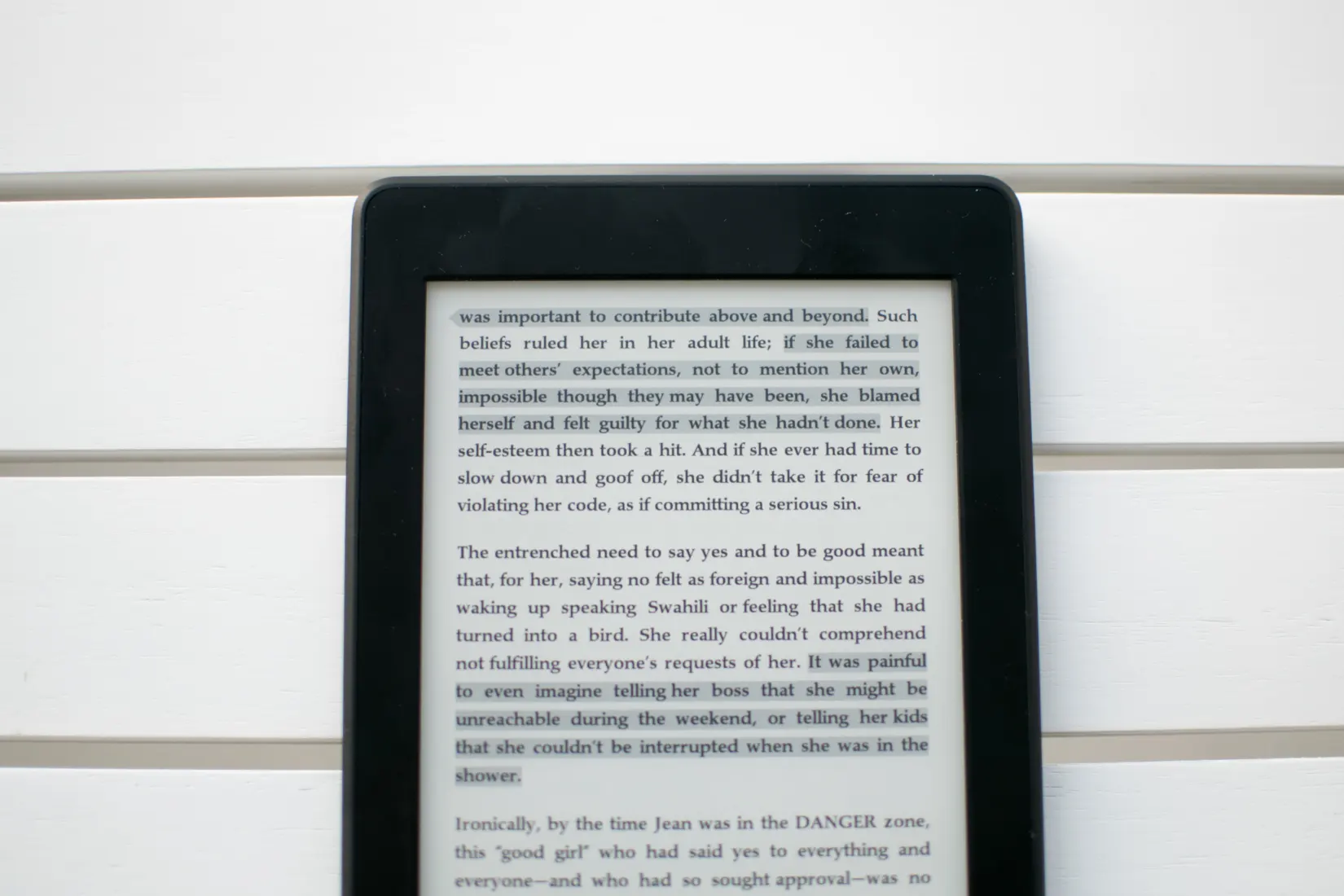
To be honest, after getting a Kindle I read the first 2–3 books out of sheer enthusiasm. But two features kept me reading. The first is being able to highlight passages I like and open them later as a text file to use in my blog posts — a huge convenience. The second is portability. As I said at the start, I don't set aside special "reading time", so whenever I'm on public transport, waiting for someone, or have a few minutes to kill, my books are with me. That naturally encourages you to read.
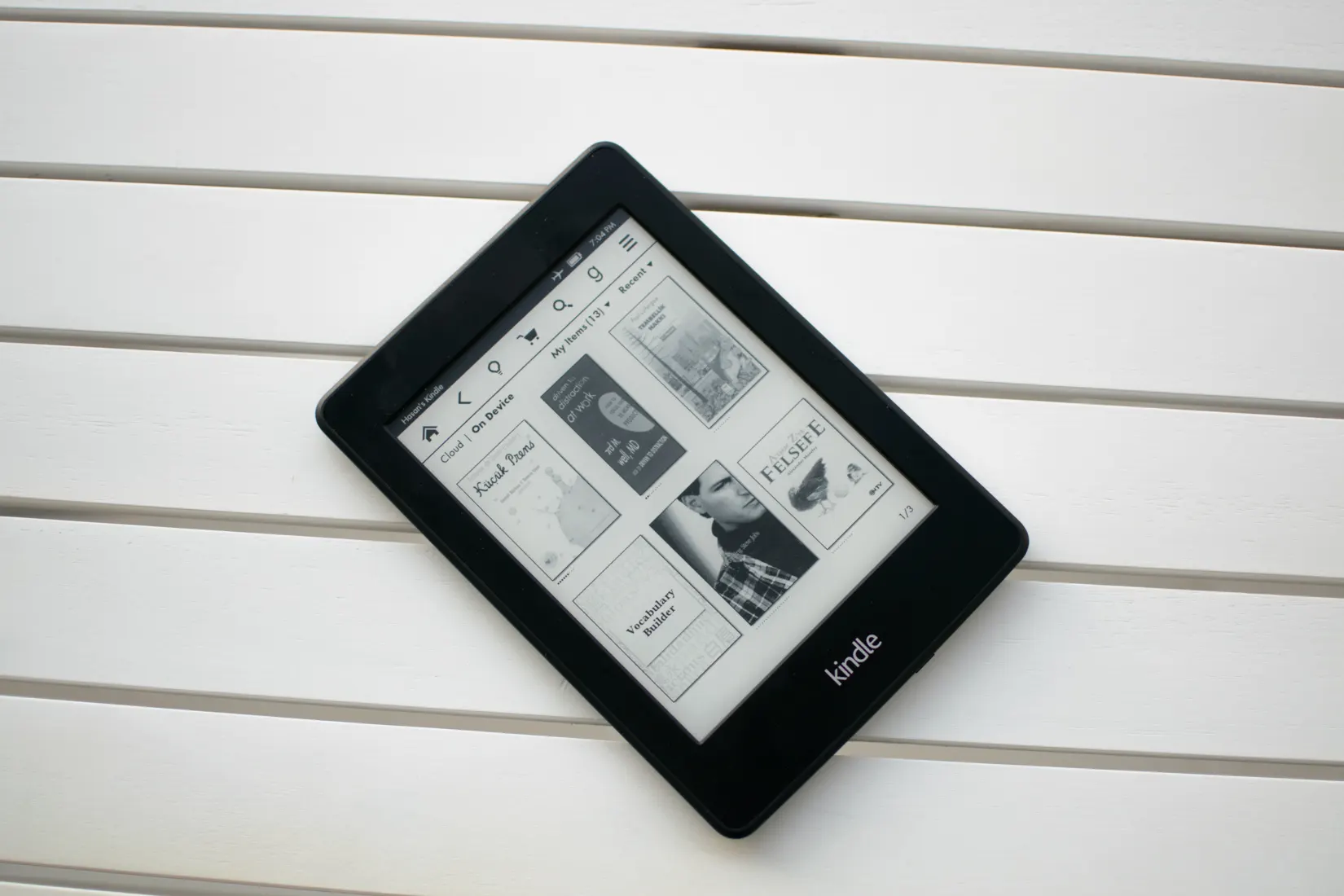
Apart from that, the Kindle (and other e-readers) don't have many features, which is actually an advantage for reading. Whenever I try to read something on the iPad, a notification pops up at the top, someone sends a message, or my hand drifts to the Facebook or LinkedIn app, and I abandon the book for more colorful, "concentrated" content. With the Kindle, all you can do is read — and I think that's an important advantage.
Foreign-Language Sources
If you also follow sources in languages other than Turkish, e-readers become even more valuable. After you buy a printed book from Amazon, it takes at least 1–2 weeks to reach you. If there's an e-book edition, though, you can start reading within minutes of buying it.
Conclusion
With more e-books on the market every day, if you travel often or spend a lot of time in traffic, give e-book readers a chance. You'll find plenty of resources online on topics like how to buy books and how to convert them to e-book formats.
0 Comments
Leave a comment